
Tyres, wheel balancing and alignment in Peterborough
Exclusive Auto supplies and fits new tyres, balances wheels, sets wheel alignment and repairs punctures at the mechanics workshop in Peterborough. We fit tyres for cars, vans and 4x4s, from budget ranges to premium brands, and check the tyres you keep for tread depth, pressure and damage.
Are your tyres or tracking due for attention?
Tyre and alignment problems show up in how the car feels on the road and in the way the tread wears.
- Tread close to the legal limit, or worn level with the tread wear indicator bars
- One edge of a tyre wearing faster than the other, a typical sign of misalignment
- The car drifting to one side on a straight, level road
- A steering wheel that sits off-centre when you are driving straight ahead
- Vibration through the steering wheel at motorway speeds, often a balance problem
- Cuts, bulges or cracking in the sidewall, or a tyre that keeps losing pressure
Tread depth, balancing and alignment explained
The legal minimum tread depth for a car in the UK is 1.6 mm across the central three-quarters of the tread, all the way round the tyre. Grip in the wet drops off well before that point, so many drivers replace tyres a little earlier.
Balancing and alignment are separate jobs. Balancing adds small weights to the wheel so it spins without vibrating, and every tyre we fit is balanced on a computerised balancer. Alignment, often called tracking, sets the angle of the wheels relative to each other and to the car. Clipping a kerb or dropping into a pothole can knock the alignment out, leaving a car that pulls and tyres that wear on one edge. Alignment only holds if the steering and suspension joints are sound, so worn track rod ends or bushes are pointed out before the wheels are adjusted.
What a tyre and alignment visit includes
- New tyres supplied and fitted for cars, vans and 4x4s
- Computerised wheel balancing on every tyre we fit
- Wheel alignment (tracking) checked and adjusted
- Puncture repair where the damage is in the repairable area of the tread
- Tread depth, pressure and sidewall checks
- Wheel nuts tightened to the maker's torque setting
From tyre check to wheels back on
- 1
Check the tyres and damage
We look at tread depth, wear pattern, sidewalls and any puncture, and tell you whether a tyre can be repaired or needs replacing.
- 2
Match the right replacements
Replacement tyres are matched to your car's size, load and speed ratings, with budget and premium options to suit how you drive.
- 3
Fit, balance and torque
Each tyre is fitted, the wheel is balanced on the computerised balancer, and the wheel nuts are torqued to the specified figure.
- 4
Set the alignment if needed
If the wear pattern or the way the car drives points to misalignment, the tracking is checked and adjusted to the maker's settings.
- 5
Final inspection and handover
Pressures are set to the figure for your car, and we go over what we found, including anything worth watching on the remaining tyres.
What sets the price of tyres and alignment
- Tyre size, and whether the car needs run-flat or reinforced tyres
- A budget, mid-range or premium brand
- How many tyres you need, and whether the pair on that axle should match
- Whether a puncture can be repaired or the tyre has to be replaced
- Whether the tracking is a simple adjustment or seized track rod ends have to be freed or renewed first
Message your tyre size, printed on the sidewall (for example 205/55 R16), on WhatsApp for a free estimate before anything is fitted.
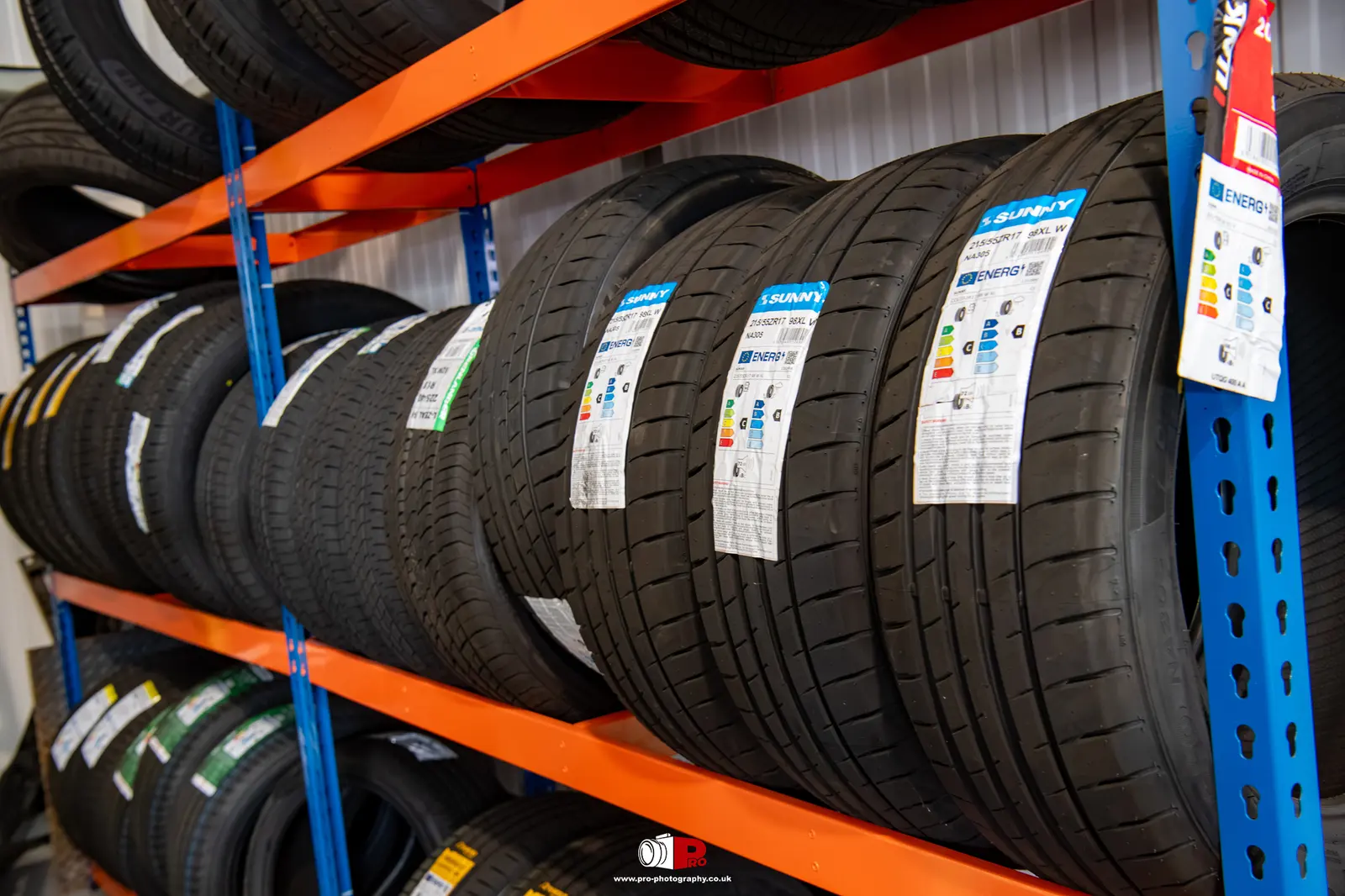
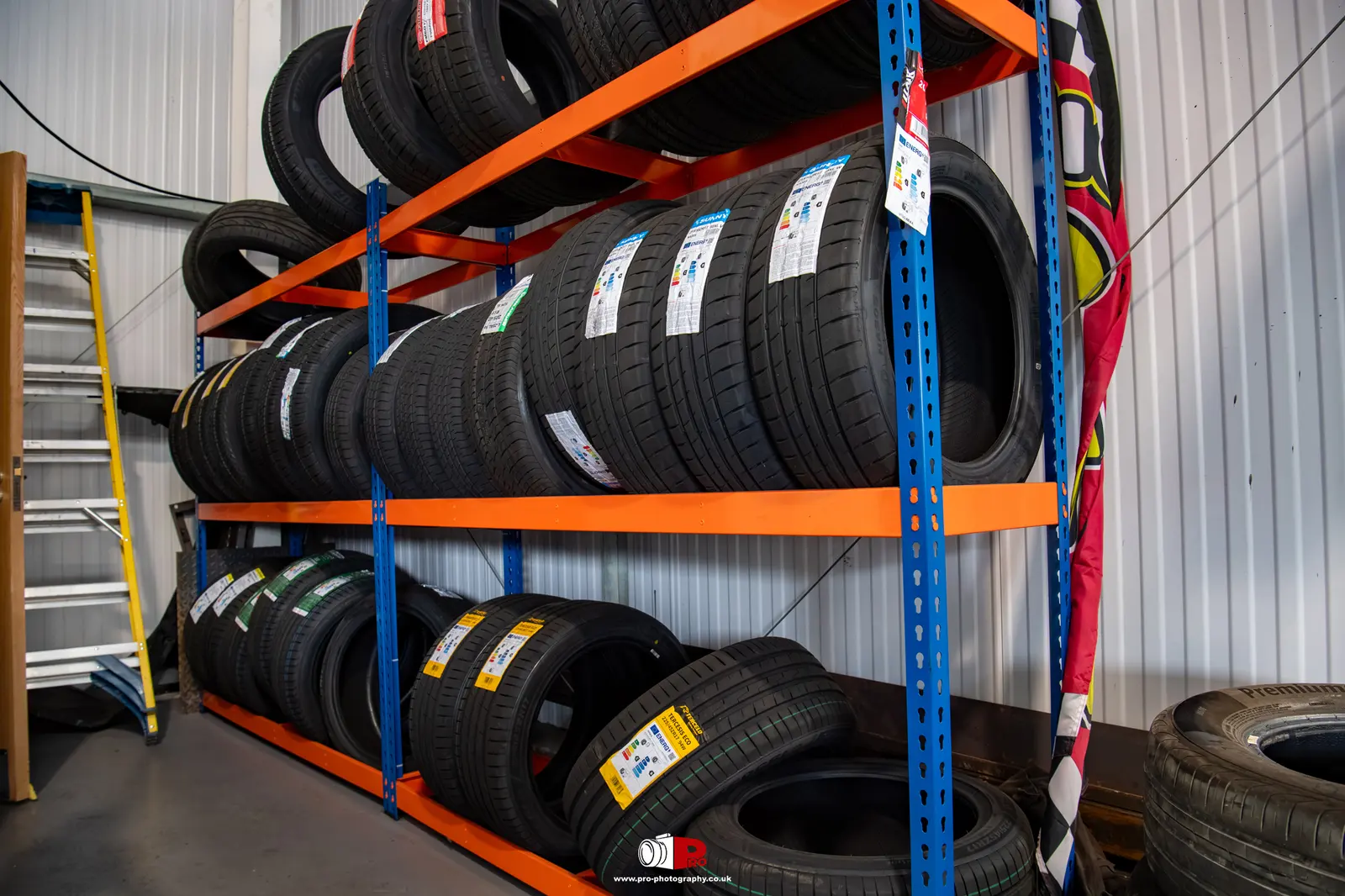
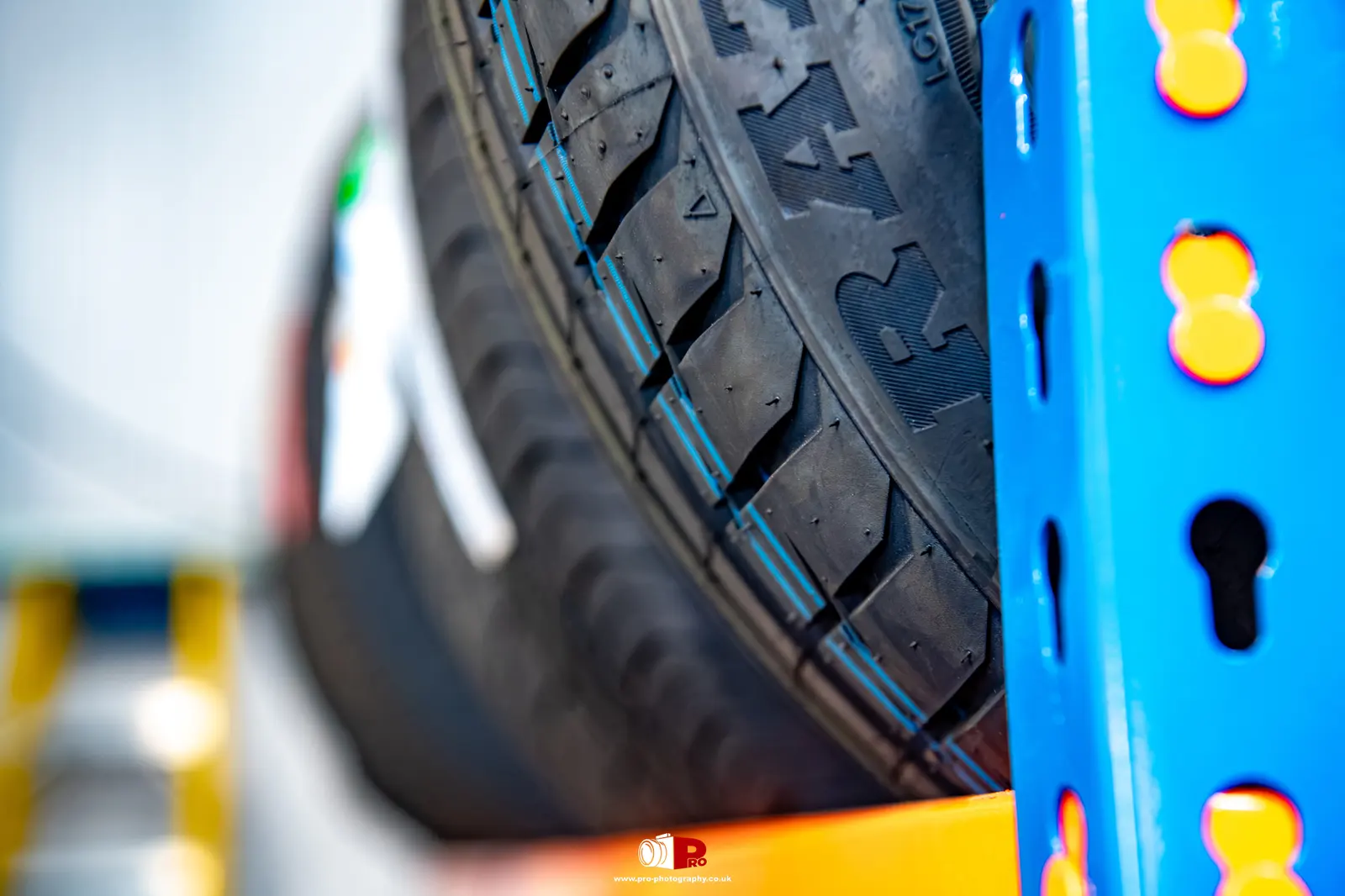
Photos from the workshop
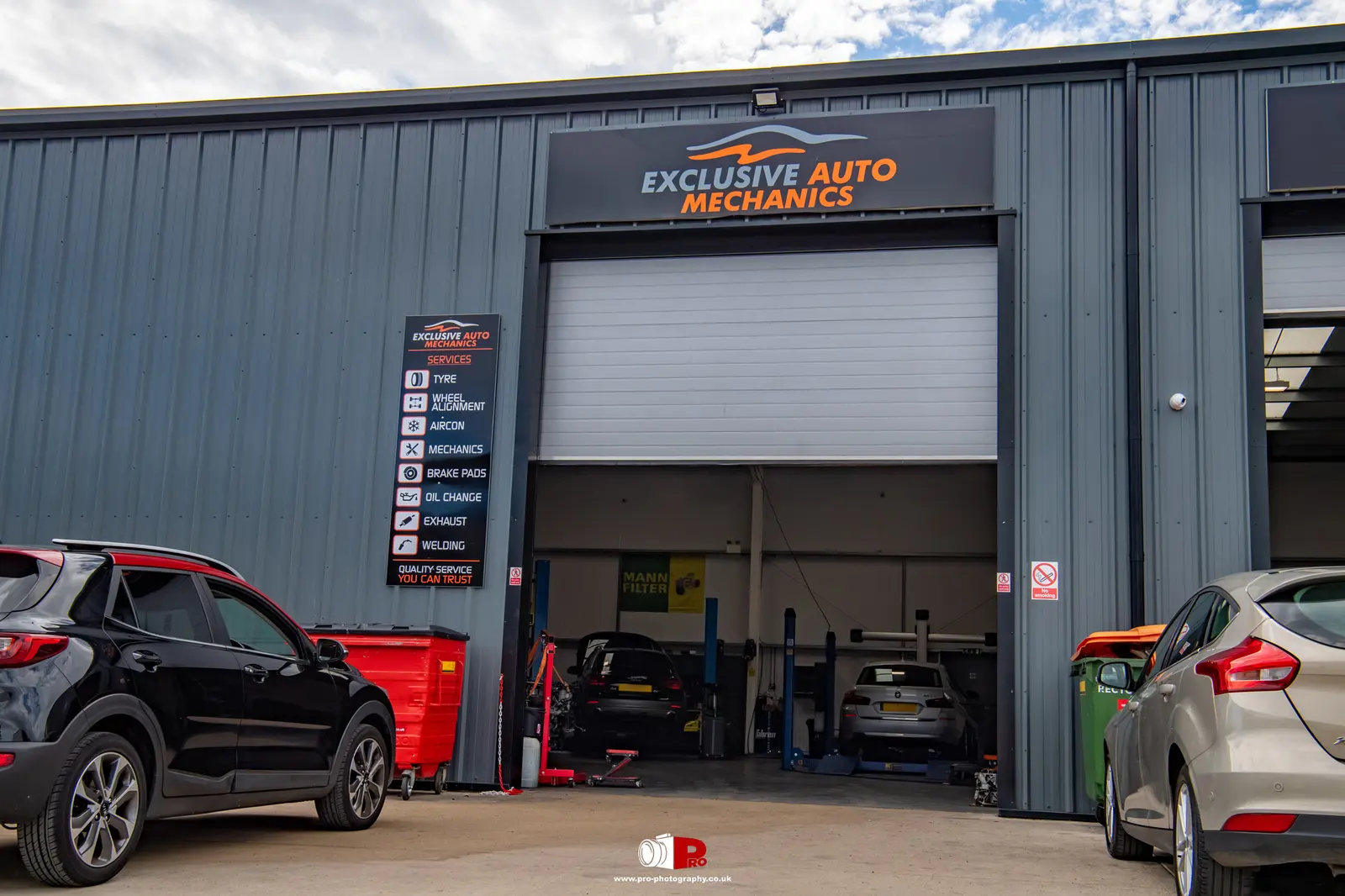
Mechanical work from our workshop on Welbeck Way, Peterborough.
Showing 4 photos
Tyre and alignment questions
A puncture can usually be repaired when it sits in the central part of the tread, is small, and the tyre hasn't been driven on while flat. Damage near the shoulder or in the sidewall can't be repaired safely, so that tyre would need replacing.
The legal minimum for cars in the UK is 1.6 mm of tread across the central three-quarters of the tyre, around its whole circumference. Driving on tyres below that limit can bring a fine and penalty points for each illegal tyre.
Wheel alignment is worth checking if the car pulls to one side, the steering wheel sits crooked, or the tyres wear on the inside or outside edge. A hard kerb strike or a deep pothole is also a good reason to have the tracking looked at.
Replacing tyres in pairs on the same axle keeps grip and handling even from side to side. A single new tyre can be fine when the other tyre on that axle still has plenty of tread and is a similar make and pattern.
Steering wheel shake that appears at higher speeds is most often a wheel out of balance, for example after a balance weight has dropped off. A bent rim, a damaged tyre or worn suspension parts can feel similar, so the wheels and tyres are checked first.
Suspension repairsRelated services
Suspension Repairs
Shock absorbers, springs, bushes and arms replaced to cure knocks and restore handling.
Brakes & Clutches
Pads, discs, calipers and fluid, plus clutch repair and replacement, for safe stopping and smooth gear changes.
MOT Preparation
A pre-MOT check and any repairs it turns up, so your car is ready before it goes in for its test.
Page last updated .
Need a quote? Send us a few photos.
Free estimates and honest advice. Claiming on insurance? You get an itemised estimate to send your insurer.